
Clay builds your own enrichment on two meters; Apollo sells a database with a sequencer per seat. For 1,000 verified emails, Apollo costs less.
Key takeaways
- Clay's Launch plan costs $185 a month for 2,500 Data Credits and 15,000 Actions, as read on Clay's pricing page on September 27, 2026.
- Apollo's Basic plan costs $49 per user per month on annual billing with 30,000 credits a year, as read on Apollo's pricing page on September 27, 2026.
- A verified work email costs 1 credit on Apollo. On Clay it costs 1 Data Credit and 3 Actions, according to Clay's own pricing calculator, read on September 27, 2026.
- By our arithmetic, 1,000 verified emails use about $62 of a Clay Launch allowance, or about $20 of an annual Apollo Basic seat's credits.
- Neither tool charges for a lookup that finds nothing, so the real cost gap sits in the plan minimums, the seats and the time spent building.
Why do founders compare Clay and Apollo?
Because both promise a list of reachable prospects, and they get there in opposite ways. Clay is a spreadsheet that calls third-party data providers for you, so you build the enrichment yourself. Apollo is a stored contact database with sequences and a dialer attached, so you buy the data and the sender together.
For a founder doing his own outbound, that choice is really about time and cash. Clay rewards someone who enjoys building tables and waterfalls. Apollo rewards someone who wants to filter, reveal and send the same afternoon. The price pages make the two look similar, since both use credits. The mechanics underneath are very different, which is why this comparison costs one concrete job, 1,000 usable rows, instead of comparing plan names.
Which criteria should decide between Clay and Apollo?
Five criteria decide it for a small team. The first is the cost of 1,000 usable rows, meaning contacts with a verified work email. The second is the plan minimum you pay to get there. The third is whether sending is included. The fourth is how the bill grows with each extra user. The fifth is the build effort before the first email goes out.
Feature lists matter less than these five. Both tools can enrich a CSV, both connect to a CRM on the right plan, and both have a sequencer of some kind. What separates them is what you pay per usable row and who does the work. The table below scores both against the five criteria, with Freelvy as a third option.
Clay's plan figures come from Clay's pricing page, and Apollo's from Apollo's pricing page, both read on September 27, 2026.
What do 1,000 usable rows cost on Clay?
About $62 of allowance, inside a $185 monthly bill. The arithmetic uses Clay's entry rates. A Data Credit costs $0.05, the entry rate in Clay's pricing FAQ. An Action costs about $0.004, since the Launch plan's Actions line is priced at $60 for 15,000. Both figures appear on Clay's pricing page.
Now the per-row cost. Clay's own pricing calculator prices a work email at 1 Data Credit and 3 Actions, about $0.06 by our arithmetic. For 1,000 rows, that is 1,000 Data Credits at $0.05, or $50, plus 3,000 Actions at $0.004, or $12. The total is $62, which fits inside Launch with 1,500 Data Credits to spare.
Our assumptions are simple. A usable row is a contact with a verified work email. Only rows that return a result are billed, since Clay charges neither meter when an enrichment returns nothing, per its pricing FAQ. Taxes and provider contracts you bring yourself are excluded.
What do 1,000 usable rows cost on Apollo?
About $20 of an annual Basic seat's credits. Apollo prices a verified email at 1 credit. A Basic seat on annual billing costs $49 a month, or $588 a year, for 30,000 credits granted upfront, per Apollo's pricing page. That puts one credit at about $0.02, by our arithmetic.
So 1,000 verified emails spend 1,000 credits, about one thirtieth of the seat's year. Apollo's help center says it charges 1 credit per primary email, and only for contacts with a verified business email. Rows with nothing found cost nothing, as on Clay.
Once the allowance runs out, you buy add-on credits, which renew with the subscription and expire at the end of each billing cycle, per Apollo's plan management guide. Apollo's pricing page does not publish their price.
Phone numbers change the picture too. A phone number costs 8 credits on Apollo, per Apollo's credits page. So 1,000 phone numbers spend 8,000 credits, more than a quarter of a Basic seat's year. Monthly billing costs more per seat. Basic is $65 a month on the monthly toggle, with 2,500 credits a month, per Apollo's pricing page.
| Option | Price |
|---|---|
| Freelvy Starter, unlimited team members | €49/month |
| Apollo Basic, 1 user | $65/month |
| Clay Launch | $185/month |
How do Clay and Apollo score on the other criteria?
Apollo wins on plan minimum and on sending. Clay wins on flexibility and on what the bill does as the team grows. Build effort favours Apollo by a wide margin for a founder working alone, since Clay asks you to design the table before it returns anything.
Start with the minimum. A founder who needs 1,000 rows a month pays $185 on Clay Launch, because there is no smaller paid plan. On Apollo, one Basic seat covers the same rows for less, on either billing option.
Sending is the second gap. Apollo includes sequences and a dialer in the bundle. Clay's pricing page lists a native Sequencer, and its FAQ on sending emails describes pushing finished outreach to the sequencer you already use.
Team growth reverses the order. Apollo bills every user, so a fifth rep adds a fifth seat. Clay bills usage, so a new person changes little until the tables run more often. Our Clay pricing breakdown shows how the two meters behave as volume grows, and our Apollo pricing guide covers the credit rules per seat.
Clay vs Apollo: the head-to-head verdict
Apollo is the better buy for a founder who needs 1,000 usable rows a month and wants to send them this week. It costs less at that volume, includes the sender and needs no build. Clay is the better buy for an operator who will run several providers, AI research and CRM pushes per row.
The deciding line is who does the work. With Apollo you rent the database and accept its coverage. With Clay you pay a higher floor and spend hours building, and in return you choose every provider in the waterfall. A founder with no ops help rarely gets Clay's upside, because the tables are the product and somebody has to own them. A growth team with a builder rarely stays on Apollo alone, because a single stored database caps what the list can find.
Freelvy, the third option: describe the customer instead of building or filtering
Freelvy is our product. It is an AI sales platform that you use the way you use ChatGPT or Claude. You describe the customer you want in one prompt. Freelvy searches 40+ live sources at query time, such as maps, official company registries, job boards, storefronts and ad libraries, instead of filtering a stored database. It enriches every row through provider waterfalls, 23 for email and 13 for phone numbers, then writes and sequences the outreach in the same thread. The waterfalls find and verify more than 92% of emails and find more than 90% of phone numbers.
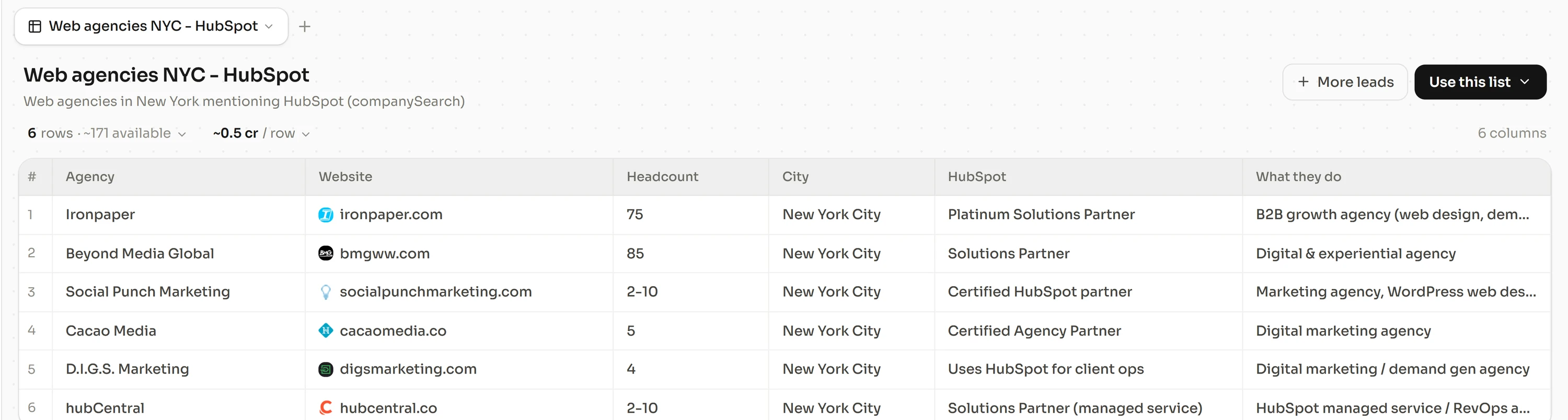
Best for founders and small teams who want Clay's waterfall without building it, and Apollo's sender without buying seats.
Strengths. Search, data enrichment and sequencing sit in one thread instead of three tools. A row that fails verification is never delivered and never billed. The sequencer is unlimited and sends from your own Google or Microsoft mailbox, so sending is not billed per email. Buying signals such as hiring, funding, reviews and ads can shape the list, and briefs can run on a schedule.
Price. Starter is €49 a month for 1,500 credits, Pro is €179 for 6,000 and Max is €499 for 18,000. A verified email costs 3 credits and a verified phone number 15. So 1,000 verified emails use 3,000 credits, which fits inside Pro. Team members are unlimited, billing is monthly with no lock-in, and there is a free 7-day trial, no credit card, at freelvy.com.
Freelvy isn't for teams that would rather pay one tool for the data, another for enrichment and a third for sending.
Which should you pick?
Pick by the job in front of you, not by the logo. Each case below names one tool and the reason, starting with the case where neither Clay nor Apollo fits cleanly.
Freelvy if you want verified rows and a running sequence from one prompt, with no seats to count and no table to build. It suits founders who prospect between delivering the work and running the business.
Apollo if your buyers are well covered by a stored database and you want the cheapest in-plan cost per verified email. Keep an eye on phone numbers at 8 credits and on add-on credits once the allowance runs out. Our Apollo alternatives comparison covers what to do if coverage disappoints.
Clay if someone on the team will own the tables and you need several providers, AI research or CRM pushes per row. The $185 floor is worth it only when that builder exists.
How we verified
Clay's pricing page, pricing calculator and FAQ, and Apollo's pricing page, credits page and help center, were read on September 27, 2026. Every cost for 1,000 rows is our own arithmetic on those published figures.
FAQ
Is Clay cheaper than Apollo?
Not for a small team that needs verified emails. By our arithmetic, 1,000 verified emails use about $62 of a Clay Launch allowance, inside a $185 monthly minimum. The same rows use about $20 of an annual Apollo Basic seat's credits at $49 a month. Clay gets relatively cheaper when many users share one usage-based plan.
Can I use Clay and Apollo together?
Yes. Many teams search in Apollo and enrich or score the export in Clay, or plug Apollo in as one provider inside a Clay waterfall. You then pay both bills. Clay's Launch plan at $185 a month sits on top of Apollo's per-user price, so the combination makes sense only when the extra providers find rows Apollo misses.
Does Clay charge for a lookup that finds nothing?
No. Clay's pricing FAQ, read on September 27, 2026, says an enrichment that returns no result costs neither Data Credits nor Actions. Apollo applies a similar rule to emails and charges only for contacts with a verified business email. On both tools, the cost of 1,000 usable rows depends on found results, not attempts.
How much does a phone number cost on Clay and Apollo?
On Apollo, a phone number costs 8 credits, eight times an email, per Apollo's credits page. On Clay, the cost depends on the phone provider the table calls, so it varies widely by waterfall. On both tools, a calling-heavy list costs several times an email-only list, so budget phones separately.
Does Apollo or Clay include an email sequencer?
Apollo includes sequences and a dialer on its paid plans. Clay's pricing page lists a native Sequencer, and its FAQ describes pushing Clay output to the sequencer you already use. Freelvy includes an unlimited sequencer that sends from your own Google or Microsoft mailbox.
Which is better for a founder with no ops team?
Apollo, in most cases, because it needs no build and includes the sender. Clay repays the time a builder puts into tables and waterfalls, and a founder rarely has that time. If you would rather describe the customer than filter a database, Freelvy runs the search, the verification and the sequence from one prompt.
Sources and methodology
Every page below was read on September 27, 2026, and the figures taken from them are attributed in the text. Costs for 1,000 rows are our arithmetic.
- clay.com, pricing
- clay.com, pricing calculator
- clay.com, faq how do i send emails with clay
- apollo.io, pricing
- apollo.io, pricing about credits
- knowledge.apollo.io, articles 6319289281805 Will Apollo Charge Me for More Than One Email per Contact
- knowledge.apollo.io, articles 4677130104333 Customize and Manage Your Apollo Plan
- https://freelvy.com/pricing