
Apollo's list prices in 2026 are $49, $79, and $119 per user per month billed annually, plus a free plan. Those numbers are accurate, verified on Apollo's official pricing page on September 23, 2026. They are also not what most teams end up reasoning about, because since Apollo began moving accounts to a unified credit system in 2025, the real currency of an Apollo subscription is credits, and credits behave in ways the price table does not show.
Key takeaways
- Official 2026 plans: Free ($0, 900 credits a year granted monthly), Basic $49, Professional $79, Organization $119 per user per month on annual billing. On monthly billing, Basic is $65 and Professional $99, and Organization is annual only.
- Credits per seat per year: 30,000 (Basic), 48,000 (Professional), 72,000 (Organization), granted upfront.
- A phone number costs 8 credits and an email 1, per Apollo's own credits page.
- No rollover: Apollo's credits page says unused credits expire at the end of each billing cycle, including at renewal.
- The free plan gives about 75 credits a month and, according to HeroHunt, about 10 export credits a month, which makes it an evaluation tier.
Here is the complete picture, plan by plan, then the four credit rules that decide your real cost.
The 2026 plans, from the official page
Monthly billing costs more. On September 23, 2026, Apollo's pricing page showed $65 for Basic and $99 for Professional per user per month on monthly billing, with credits granted monthly (2,500 and 4,000 a month). Organization shows $149 per user per month on that toggle but is marked "Annual only". The 24 percent saving Apollo advertises for annual billing matches $49 against $65.
| Option | Price |
|---|---|
| Apollo Basic, annual billing | $49/month |
| Apollo Basic, monthly billing | $65/month |
| Apollo Professional, annual billing | $79/month |
| Apollo Professional, monthly billing | $99/month |
| Apollo Organization, annual billing | $119/month |
What the bundle includes is genuinely broad at every paid tier: the contact database, sequences, a dialer, CRM integrations, deliverability tooling, and Apollo's AI features. SalesQuants' 2026 review calls it the best value in the category at this price point. Most surprises come from the credit meter rather than from the price table.
Rule 1: credits are spent when data leaves the platform
Searching and filtering inside Apollo is free. The meter runs when you reveal or export. Apollo's pricing FAQ says export credits are consumed whenever you export a contact outside of Apollo, by CSV, CRM sync or API enrichment, and its credits page prices an email at 1 credit. A 1,000-contact list revealed and pushed to your CRM costs at least 1,000 credits for the emails alone, a meaningful bite out of a Basic seat's 30,000-credit year.
Rule 2: phone numbers cost 8 credits each
A phone number costs 8 credits and an email 1, according to Apollo's credits page, and the 8 credits apply to mobile, direct and office numbers alike. A calling-focused team revealing 500 numbers a month consumes 4,000 credits monthly, or 48,000 a year, which is an entire Professional seat's annual allowance spent on phone numbers alone. Lusha prices a phone number at 5 credits, and our Lusha pricing per phone credit breakdown converts each of its plans into a cost per mobile number. This matters twice over because phone accuracy is also a recurring complaint in reviews, especially outside North America.
Rule 3: credits expire, nothing rolls over
Unused monthly credits on the free plan vanish at each cycle, and annual allowances are bounded by the subscription year. Apollo's credits page states that credits expire at the end of each billing cycle and "do not roll over into the following billing cycle or upon renewal", and that annual plans unlock all their credits at the start of the year. A team that spends its allowance early buys add-on credits or upgrades to finish the year.
Rule 4: the free plan is now an evaluation tier
The free plan's 900 yearly credits arrive as roughly 75 a month, and the export path is capped hard. HeroHunt's analysis of the free-tier changes describes about 5 mobile credits, 10 export credits and 50 AI credits a month. You can search a large database and look at it, but you cannot work it. For solo users who built a workflow on the older free plan, this was the change that broke it.
So what does Apollo really cost?
For a team selling mainly into North America that mostly reveals work emails, stays inside its allowance, and uses the whole bundle, the sticker price is honest: $49 to $119 per seat is the category's best feature-for-price deal. The gap between sticker and reality opens with phone numbers at 8 credits, exports at scale, expiring allowances, and data quality outside North America. MailReach's 2026 review puts Apollo's accuracy at 60 to 73 percent outside its core market, and Salesforge, itself a sales software vendor, reports practitioner tests at 65 to 80 percent against a marketed 91 percent. Docket's pricing research puts real spend for active teams at $150 to $400 per user per month after overages, a figure we could not verify independently but which matches the mechanics above.
If you are comparing options beyond the credit math, our Apollo alternatives comparison covers six tools by the specific problem each one solves. For the bill at team scale, our guide to sales intelligence cost prices a ten-rep team on five tools. If you are weighing Apollo against building your own enrichment, our Clay vs Apollo breakdown costs 1,000 usable rows on each.
Where Freelvy sits in this conversation
Freelvy is our product, an AI sales platform. It works the way ChatGPT or Claude does: you describe the customer you want in one prompt, and Freelvy searches 40+ live sources at query time, maps, official company registries, job boards, storefronts and ad libraries, rather than filtering a stored database. It then enriches every row with verified contact data, 18 providers in cascade for emails and 12 for phone numbers, and writes and sequences the outreach from the same brief. The waterfalls find and verify more than 92% of emails and find more than 90% of phone numbers. Search, enrichment and sequencing sit in one thread instead of three tools. Plans start at €49 per month for 1,500 credits, team members are unlimited on every plan, and a row that fails verification is never delivered and never billed.
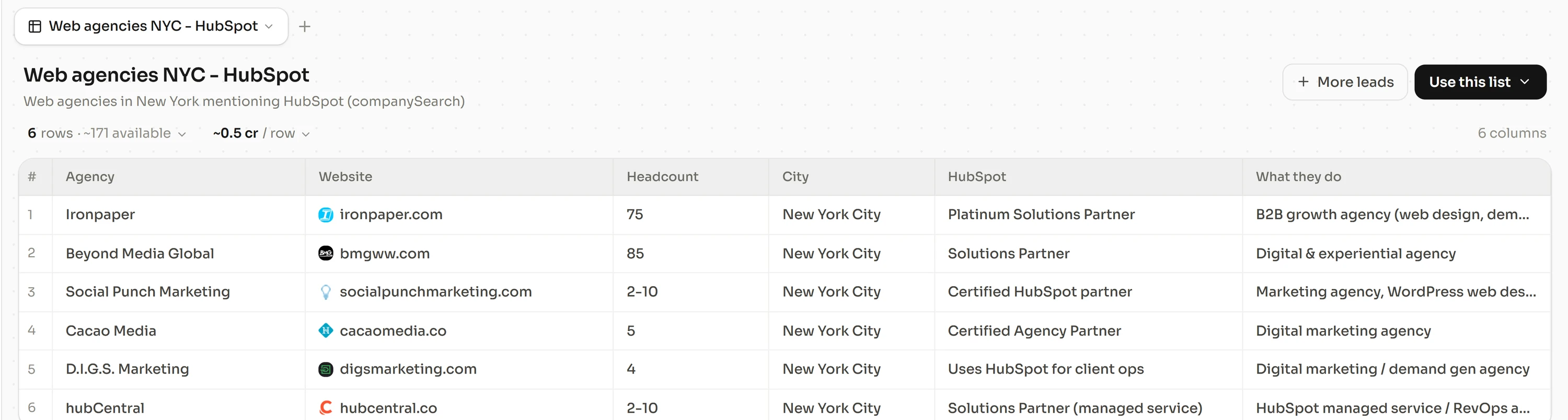
Freelvy does not price by seat, which suits founders who prospect before they hire a first rep. Every plan includes unlimited team members, so adding a rep never changes the bill, whereas Apollo charges each seat and starts Organization at three seats ($4,284 a year at $119). Freelvy reads 40+ live sources at query time instead of a stored contact database, then runs data enrichment and sequences the list in the same thread, and a row that fails verification is never delivered and never billed. There is a free 7-day trial, no credit card, at freelvy.com.
How we verified these numbers
The plan table was read on apollo.io/pricing on September 23, 2026, with both the annual and the monthly billing toggles, together with Apollo's About Credits page. The free-plan limits, the accuracy figures and the real-spend estimate come from the third-party analyses linked in the text.
FAQ
How much does Apollo cost per user in 2026?
On annual billing, $49 (Basic), $79 (Professional) or $119 (Organization, 3-seat minimum) per user per month, as displayed on the official pricing page on September 23, 2026. On monthly billing, Basic costs $65 and Professional $99, and Organization is annual only; Apollo advertises annual billing as a 24 percent saving.
How many credits do you get with each Apollo plan?
Per seat per year: 900 on the free plan, granted monthly; 30,000 on Basic; 48,000 on Professional; 72,000 on Organization, all granted upfront on the paid tiers. Credits are the real unit of consumption, spent when you reveal or export contact data rather than when you search.
Do Apollo credits roll over?
No. Apollo's own credits page says credits expire at the end of each billing cycle and do not roll over, even at renewal (checked September 23, 2026). On annual plans the whole year's credits arrive on day one, so a team that front-loads exports can run short before renewal and then faces add-on credits or an upgrade.
How many credits does a mobile number cost on Apollo?
Eight credits per phone number, mobile or direct, according to Apollo's credits page, which is eight times the cost of an email. A team revealing 500 phone numbers a month spends 4,000 credits a month, which over a year equals the 48,000 credits of an annual Professional seat.
Does Apollo offer a free trial?
Yes. The official page shows a 14-day trial on the Basic and Professional plans, alongside a permanent free plan. Apollo's pricing FAQ says trials include a limited credit allowance (50 credits and 5 mobile credits on September 23, 2026) and almost all of the plan's features; linking a mailbox other than Gmail or Microsoft is not included. The free plan is limited to about 75 credits a month and a low export cap, so it works for evaluation rather than daily prospecting.
Sources and methodology
All pages below were consulted on September 23, 2026. Prices from official pages are stated directly; figures from third-party analyses are attributed in the text.
- apollo.io, pricing
- apollo.io, pricing about credits
- salesquants.com, apollo io review 2026 the best all in one outbound tool if you can live with imperfect data
- herohunt.ai, blog apollo pricing 2026 free tier cut and alternatives
- docket.io, research apollo pricing
- mailreach.co, blog apollo io review
- salesforge.ai, blog apollo io review