
Open with one dated, checkable thing that happened at the account, then tie it to the problem you solve, in under 25 words.
Key takeaways
- Instantly's Cold Email Benchmark Report 2026 puts the average reply rate at 3.43%, with the top quarter of campaigns at 5.5% or more and the top tenth at 10.7% or more.
- The same report attributes 58% of replies to the first email of a sequence, so the first line carries most of the result.
- Snov.io's 2026 analysis of more than 10 million cold emails reports a 0.58% reply rate for personalised emails against 0.42% for non-personalised ones.
- The Gmail app shows roughly 45 characters of preview text on a phone, according to Courier's inbox preview tool, so the reason to read must sit at the very start.
- An attribute the buyer already knows about themselves, such as their title, reads as a template. An event with a date reads as research.
An SDR or BDR writes more first lines in a week than most people write in a year. This guide explains why most of them get skipped, and how to write one that earns the second sentence, with rewrites you can copy.
Why do most opening lines get skipped?
Because they tell the buyer something they already know. "I see you're the Head of Operations at your company" states an attribute. The buyer knows their title, and so does every sales tool. The line proves only that a field was merged, which is the signal of a template.
The numbers follow. Snov.io's 2026 statistics page reports a 0.58% reply rate for personalised emails against 0.42% for non-personalised ones, and 20.79% opens against 14.96%. The gap is small, which fits the point above: a merged field is not research.
The first email also decides most of the outcome. Instantly's 2026 benchmark attributes 58% of all replies to step one. A weak opener on step one is not saved by a strong follow-up, because most of the replies a sequence will ever get were decided there.
What is the difference between an attribute and an event?
An attribute is a fact that stays true for months: a title, an industry, a headcount band, a city. An event is something that happened on a date: a hire, a launch, a new location, a review, a price change. Attributes decide who goes on the list. Events decide what you say.
The rule is simple. Use attributes to build the list and events to write the message. Most weak openers swap the two.
Six weak openers, rewritten
Each row below starts from an opener SDRs send every day and rewrites it around a dated event. The fact in brackets is what you would look up; the source type is where it usually lives. The rewrites stay under 25 words.
Two patterns repeat. Each rewrite names a date or a count you can check. And each ends close to a problem, without pitching the product in the first line.
Where do you find a dated event in five minutes?
Check five source types in order: job postings, the company's news or blog page, its maps listing and reviews, its ad library entries, and its filings in the official company register. Stop at the first event from the last 90 days that touches a problem you solve.
Job postings are the richest. They give a date, a team, a tool and often a reason, such as a new market or a migration. A news page gives launches and hires. Reviews give complaints with dates. Ad libraries show campaigns running today. The register shows a new director or a new entity.
Our guide on how to research an account before a sales call covers the same pass in more depth. For choosing which event matters most, see our ranking of buying signals worth prioritising.
How long should the first line be?
Short enough that the reason to read appears in the preview. The Gmail app shows roughly 45 characters of preview text on a phone, according to Courier's inbox preview tool, and Gmail on a desktop about 70. Put the event in the first 40 characters, and keep the whole line under 25 words.
The preview is the first line's real job. Most clients show the subject and the opening words before the email is opened. A greeting, a name and "I hope you're well" can use the entire preview without saying anything.
Drop the throat-clearing. Start with the event itself: "Saw the [role] posting from [date]" fits in the preview and gives a reason to open.
How do you keep the reason attached from research to send?
Store the event as data on the row, not as prose in a draft. Keep three columns per contact: the event, its date and the page where you saw it. The first line is then written from those columns, and anyone can check it before the send.
This also catches stale lines. An event from April is not news in October. If the date column is older than 90 days, research again or drop the row from this send.
It protects your domain too. A first line that references something false, such as a hire that never happened, gets reported. Google's email sender guidelines ask bulk senders to keep the spam complaint rate below 0.3%, and our cold email deliverability checklist covers the rest of the sending setup.
- Build the list on attributes
- Find one dated event
- Store event, date, source
- Write under 25 words
- Check the date before sending
What if there is no event to mention?
Then the row is not ready. Move it to a later send and let a scheduled search tell you when something happens. If you must write now, use a precise observation about their segment that a filter could not produce, and say plainly why you are writing.
A segment observation still beats a merged title. "Most [segment] firms quote by phone, and lose the buyers who wanted email" is specific and testable. "I see you work in [industry]" is neither.
Do not invent an event to fill the gap. A made-up compliment is easy to spot and expensive to recover from.
A prompt you can copy
The method above works one row at a time. As a brief, it can write first lines for a whole list from the event columns. Replace the brackets with your own offer.
For each company in this list, find one event from the last 90 days
that relates to [the problem you solve]: a job posting, a launch,
a new location, a funding round, a review pattern or a new director.
Record the event, its date and the source page in separate columns.
Then write a first line of under 25 words that names the event
and links it to [the problem], with no greeting and no compliment.
If no event exists in the last 90 days, leave the line empty.
The last instruction matters most. An empty line is a signal to wait, which is better than a generic one.
Where Freelvy fits
Freelvy is our product, an AI sales platform used the way you use ChatGPT or Claude. You describe the customer you want in one prompt, and Freelvy searches 40+ live sources at query time, including maps, official company registries, job boards, storefronts and ad libraries, instead of filtering a stored database. The events in the table above come from those same source types.
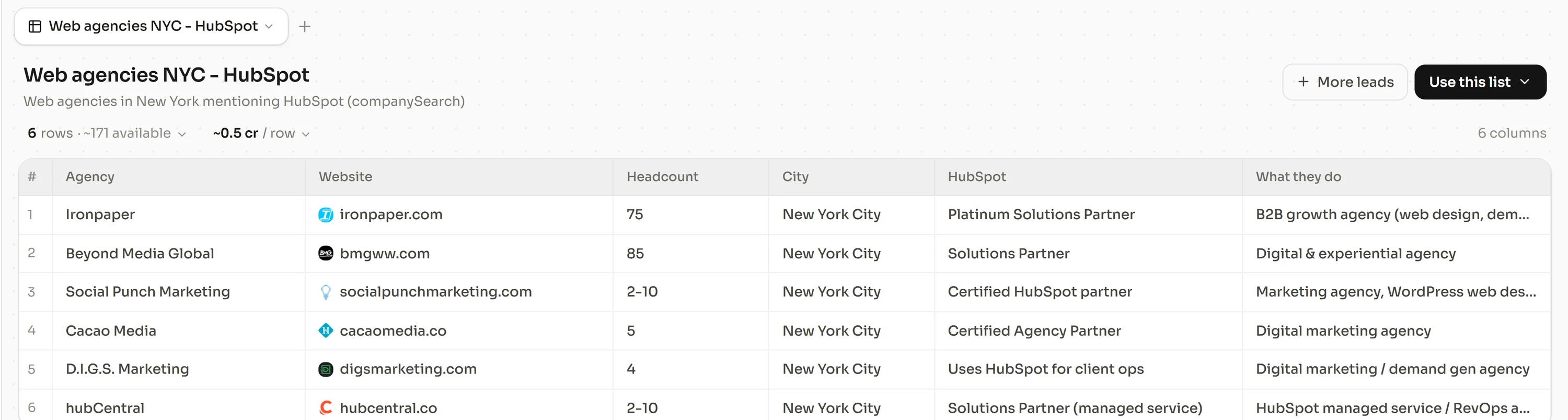
Every row is enriched through cascades of 18 email providers and 12 phone providers, which find and verify more than 92% of emails and find more than 90% of phone numbers. Freelvy then writes the first line from the event on the row and sequences the outreach in the same thread. Pricing is per seat, billed monthly, from €99 per seat a month with 2,200 credits.
Free 7-day trial, no credit card, at freelvy.com.
Freelvy isn't for teams that would rather pay one tool for the data, another for enrichment and a third for sending.
How we verified this
On October 19, 2026, we read Instantly's Cold Email Benchmark Report 2026, Snov.io's cold email statistics page, Courier's mobile inbox preview tool and Google's email sender guidelines. The rewrites, the table of attributes and events, and the prompt are our own work.
FAQ
What is a good first line for a cold email?
One that names a dated, checkable event at the account and connects it to a problem you solve, in under 25 words. "Saw the [role] posting from [date], third this quarter" works because it is specific, recent and only true of that company. A title or an industry is not enough.
Should a cold email start with a greeting?
A short "Hi [first name]" is fine, but skip the pleasantries after it. The Gmail app shows roughly 45 characters of preview text on a phone, per Courier's tool, so "I hope this email finds you well" can use the whole preview and give no reason to open.
How do I personalise a first line at scale?
Store the event, its date and its source as columns on each row, then write the first line from those columns. That keeps the reason attached from research to send, lets a reviewer check every line, and flags stale events when the date is older than 90 days.
What is a trigger event in cold email?
A dated change at the account that creates a reason to write now: a job posting, a funding round, a new location, a launch, a run of reviews or a new director. A trigger works because it changes the buyer's situation, so your message arrives with a reason attached.
What reply rate should a good opener produce?
Instantly's 2026 benchmark puts the average at 3.43%, the top quarter at 5.5% or more and the top tenth at 10.7% or more. Snov.io reports 0.58% for personalised emails and 0.42% for non-personalised ones. Use those as ranges to test against.
Does the first email matter more than the follow-ups?
In most sequences, yes. Instantly's 2026 benchmark attributes 58% of replies to the first email. Follow-ups still bring in the other 42%, so keep them, but spend the research time on step one.
Sources and methodology
All pages below were read on October 19, 2026. Benchmarks come from vendors' own platform data and are attributed in the text.
- instantly.ai, Cold Email Benchmark Report 2026
- snov.io, Cold email statistics
- courier.com, Mobile inbox preview generator
- support.google.com, Email sender guidelines