
Research an account in one pass by checking seven things that move every quarter, then open the call on the one that changed most recently.
Key takeaways
- Salesforce's State of Sales report surveyed 4,050 sales professionals in August and September 2025. Reps reported spending 40 percent of their time selling.
- In the same Salesforce survey, sellers expect AI agents to cut prospect research time by 34 percent once fully implemented.
- Gartner reported on June 25, 2025 that 73 percent of B2B buyers actively avoid suppliers who send irrelevant outreach, in a survey of 632 buyers.
- LinkedIn's State of Sales Report 2021, a global survey of more than 400 buyers and 400 sellers, found that 44 percent of buyers name "not understanding my company and its needs" as a deal killer.
- In our illustration, seven checks over a 90-day window take about 12 minutes per account, plus 3 minutes to write the opener.
Most pre-call research fails in the same way. The rep opens eleven tabs, reads the About page, skims a profile and arrives with facts the prospect already knows. The first question then asks the buyer to describe his own business.
What should you check before a sales call?
Check what moved at the account this quarter, not what the company is. Seven checks cover almost every account: hiring, funding, new locations, leadership changes, reviews, advertising and technology. Each has one source type where the change shows first, and none needs more than two minutes.
The table is the whole method on one screen. The times are our illustration, not a benchmark. Replace them with your own after a week of calls.
That comes to 12 minutes in our illustration. The eleven-tab version usually takes longer and returns less, because most tabs describe the company rather than what changed.
How do you research a company fast, in one pass?
Set a 90-day window, run the seven checks in a fixed order, and write down only changes with a date. Then pick the newest change that touches your product. A fixed order stops the tab-hopping, and the date filter stops you reading history that cannot become an opener.
The window matters more than the sources. Anything older than a quarter is background. It may explain the account, but it will not explain why you are calling now.
- Set a 90-day window
- Run the seven checks
- Date every change found
- Pick the newest relevant one
- Write the opener on it
Keep a one-line note per change. Write the event, the date and the source type, for example "four open operations roles, posted in the last three weeks, job boards". Three such lines are enough for any first call.
What does each check tell you?
Each check answers a different question about timing. Hiring shows where budget is going. Funding shows new money. Locations show expansion or retreat. Leadership shows who now decides. Reviews show pain. Ads show priorities. Technology shows what you would replace.
Hiring
A job posting is a budget with a headcount attached. Look for roles in the team that would use what you sell. Three open roles in one team in a month is a stronger sign than one senior hire. The posting text often names the problem the new hire is meant to solve.
Funding
New money changes the agenda within weeks. Check the press page first, then the official company registry, which records capital increases and new shareholders even when no announcement was made. A filing date gives you the date your opener needs.
New locations
A second site means new staff, new suppliers and new processes. Maps listings show openings early, and the official company registry records new establishments. A closed site is also a change. It tells you the account is cutting, so adjust the pitch.
Leadership changes
A new head of the function you sell to usually reviews the stack in the first quarter. Compare the leadership page with the officer list in the official company registry. People move often. Lusha, a sales-data vendor, detected 1,470,414 contacts changing companies between January 1 and June 1, 2026, about 13,600 every working day.
Reviews
Recent reviews show pain in the buyer's own customers' words. Read the last 90 days only, on review sites and maps listings. One angry review is noise. The same complaint three times is a pattern, and a pattern your product fixes is an opener.
Advertising
Ad libraries show what the company is paying to promote right now. A new product line, a new audience or a sudden stop in spend all tell you where attention is. This check is fast, because you only read the start dates.
Technology
The company site and its job postings name the tools it runs. A posting that asks for experience with a specific tool tells you what is installed. A posting that asks for someone to "migrate" or "replace" tells you a project is open.
What should you skip before a sales call?
Skip anything the prospect already knows and anything you cannot date. The company history, the mission statement, the founding year and the headcount range will not start a conversation. Reading a full annual report or every social post also costs time that the call never repays.
Four habits are worth dropping.
Reading the About page closely. It tells you how the company describes itself. The prospect wrote it, so repeating it back adds nothing.
Researching every name on the committee before the first call. Map the committee after the first call, when you know which roles matter. Our guide on multi-threading a deal past one contact covers that step.
Reading changes older than a quarter. They explain the account but do not explain the call.
Copying the research into the CRM in full. Three dated lines are enough. Long notes are rarely read again.
How do you turn a change into an opener?
Name the change, name its date and ask one question about its consequence. That opener shows you read the account and gives the buyer something specific to answer. Buyers notice the difference. LinkedIn's 2021 global survey found 44 percent name "not understanding my company and its needs" as a deal killer.
Compare two openers. "Can you tell me a bit about your business?" asks the buyer to do your research. "You opened a second site in August and posted four operations roles since. How are you handling scheduling across both?" starts from his week.
Relevance is also what keeps you out of the ignore pile. In Gartner's survey of 632 B2B buyers, run from August to September 2024 and released June 25, 2025, 73 percent said they actively avoid suppliers who send irrelevant outreach. The same survey found 61 percent prefer a rep-free buying experience overall.
A dated change also helps you choose which accounts to call first. Our guide on which buying signals are worth prioritising scores each signal on freshness and proof.
How much time should account research take?
About fifteen minutes per account before a first call is a workable budget in our illustration, and less on a follow-up. The aim is the newest relevant change, not a dossier. If the seven checks find nothing in 90 days, say so in the opener and ask about the quarter ahead.
Research competes with selling for the same hours. Salesforce, a CRM vendor, surveyed 4,050 sales professionals for its State of Sales report in August and September 2025. Reps said they spend 40 percent of their time selling. Sellers in the same survey expect AI agents to cut prospect research time by 34 percent once fully implemented.
The call still matters to buyers. Gartner's survey of 645 B2B buyers, run from August to September 2025 and released May 20, 2026, found 69 percent prefer to validate AI-generated insights with a sales rep. A rep who arrives knowing what changed is the one worth that conversation.
Where Freelvy fits
Freelvy is our product. It is an AI sales platform, used the way you use ChatGPT or Claude. You describe what you want in one prompt, for example the accounts in your region that hired for operations or opened a site this quarter. Freelvy then searches 40+ live data sources at query time (maps, official company registries, job boards, storefronts, ad libraries) instead of reading a stored snapshot.
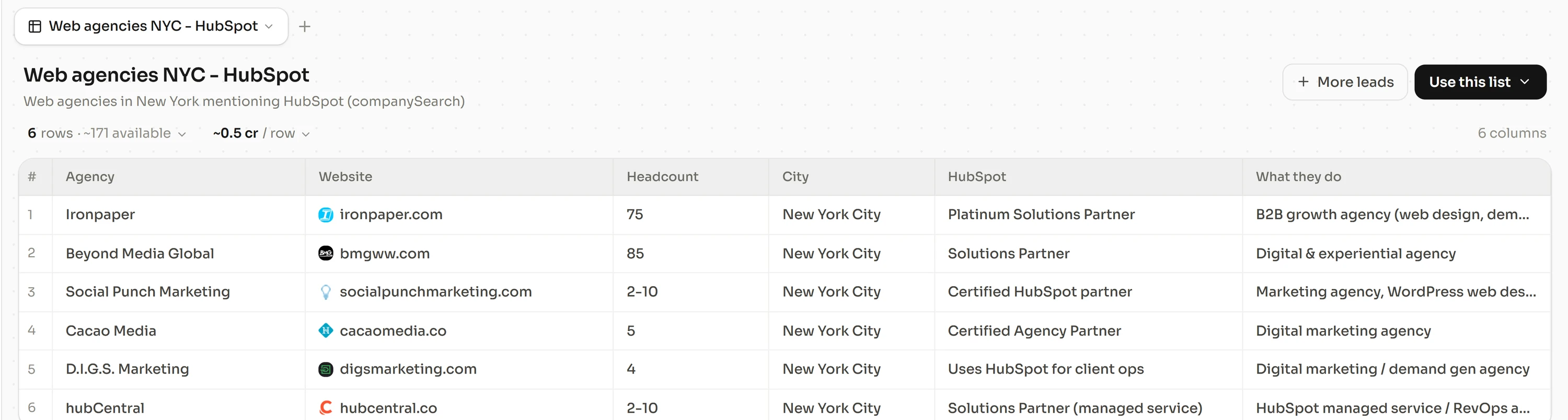
Every row carries its buying signals, such as hiring, funding, reviews and ads, so the dated change arrives with the account. Freelvy enriches each row with verified contacts through provider waterfalls, 23 for email and 13 for phone. The waterfalls find and verify more than 92% of emails and find more than 90% of phone numbers. A row that fails verification is never delivered and never billed.
Search, enrichment and sequencing sit in one thread, so the opener is written from the change that was found. Scheduled briefs rerun the same prompt before your call block. Plans start at €49 a month for 1,500 credits, with unlimited team members and no commitment. Our page for account executives covers the rest of the account work.
Free 7-day trial, no credit card, at freelvy.com.
How we verified this
We consulted every page listed under Sources on October 4, 2026. The minutes in the table are our own illustration, not a measurement. The 12-minute total is our arithmetic on those illustrative times.
FAQ
How long should I spend researching a company before a sales call?
About fifteen minutes before a first call is a workable budget in our illustration. That covers seven quick checks over the last 90 days and a few minutes to write the opener. A follow-up call needs less, because you only check what changed since the last conversation.
What is the most useful thing to find before a call?
A dated change that touches what you sell, found in the last 90 days. A hiring wave in the team that would use your product, a new site or a new head of the function are typical. One such change gives you a specific opener and a reason for calling now.
Where can I find recent changes at a company?
Each change shows first in one type of source. Job boards show hiring. The official company registry records capital increases, officers and new establishments. Maps show new sites. Review sites show recent complaints. Ad libraries show current campaigns. The company site and press page confirm the rest.
Should I research every stakeholder before the first call?
No. Research the account and the person you are calling first. Map the rest of the committee after the first conversation, when you know which roles matter to the decision. Researching eight people before one call spends time on names that may never be part of the deal.
What if I find nothing new at the account?
Then say so plainly in the opener and ask about the quarter ahead. A quiet account is information too. It may be stable, cutting back or between projects. Ask which of those applies rather than inventing a trigger, because buyers notice a forced reason for the call.
Do buyers still want to talk to sales reps in 2026?
Many prefer to research alone, and some want a rep at key moments. Gartner reported in June 2025 that 61 percent of B2B buyers prefer a rep-free experience. Gartner reported in May 2026 that 69 percent prefer to validate AI-generated insights with a sales rep.
Sources and methodology
All pages below were consulted on October 4, 2026. Figures are attributed in the text to the organizations that published them.
- salesforce.com, news stories state of sales report announcement 2026
- salesforce.com, state of sales report 2026
- gartner.com, newsroom press releases 2025 06 25 gartner sales survey finds 61 percent of b2b buyers prefer a rep free buying experience
- gartner.com, newsroom press releases 2026 05 20 gartner survey finds sixty nine percent of b two b buyers turn to sales reps to validate ai generated insights
- linkedin.com, business sales blog the linkedin state of sales report 2021
- lusha.com, blog b2b contact change report