
Before rewriting anything, read four numbers: bounce rate, inbox placement, who replies, and how many people you contacted. Each pattern points to the list or the copy.
Key takeaways
- Instantly's Cold Email Benchmark Report 2026 measured an average reply rate of 3.43%, with 58% of replies coming from the first email.
- The same report puts top-quartile campaigns at 5.5% and its best campaigns above 10%.
- Google's email sender guidelines, as relayed by 2026 compliance guides, ask senders to keep the spam complaint rate under 0.1% and never reach 0.3%.
- 2026 deliverability analyses by Instantly and EmailAddress.ai treat a bounce rate above 2% as a sign of poor list hygiene.
- Cleanlist's 2026 analysis of B2B data decay estimates that about 22.5% of a contact database goes stale each year.
- At a 3.43% reply rate, 100 contacts with no reply happens by chance about 3% of the time, by our arithmetic.
A founder who sells and hears nothing back usually blames the copy, rewrites it, and sends it to the same list. Sometimes that is right. Often the list was the problem, or nothing was wrong at all and the sample was too small. This guide sorts the four situations you can be in, by what the numbers say, and gives one test for each.
Is it the list or the copy when nobody replies?
You can tell from four numbers you already have. A high bounce rate points to the list. Clean delivery with no replies points to spam placement or the copy. Replies from the wrong people point to targeting, which is the list again. Silence under about 100 contacts often means nothing is proven yet.
The order matters. Copy is the last thing to change, because a better email sent to dead or wrong addresses still gets nothing back.
- Check the bounce rate
- Check inbox placement
- Read who replies
- Count contacts reached
- Change one thing and resend
Situation 1: your bounce rate is above 2%
The list is the problem. When more than 2% of emails bounce, the addresses are stale or were never verified, and the copy has not yet been tested at all. 2026 deliverability analyses by Instantly and EmailAddress.ai treat 2% as the line for poor hygiene, so fix this before anything else.
Data ages fast. Cleanlist's 2026 analysis of B2B data decay estimates that about 22.5% of a contact database goes stale each year, mostly because people change jobs. A list bought or exported six months ago has lost a real share of its valid addresses.
The test is simple. Take 100 rows from the list you sent, run them through verification, and count what fails. If the failure rate matches your bounces, you have your answer. Our guide on how to verify a B2B email list explains how catch-all and unknown results should be treated.
Then rebuild, do not patch. Remove every row that fails, and source fresh contacts for the accounts you still want. Sending more to a list that bounces damages the mailbox you depend on.
Situation 2: low bounces, no replies, and enough volume
Check placement before the copy. If your bounce rate is low and 150 or more contacts gave no reply, your emails may be landing in spam. Send the same email to a handful of seed inboxes on different providers and see where it lands. Only when it reaches the inbox is the copy the suspect.
Do not use open rates to judge this. Apple Mail Privacy Protection, introduced in 2021, loads tracking images automatically, so opens are inflated and tell you little about whether a person read the email. Replies and placement are the numbers to trust.
Spam complaints matter even at small volume. Google's email sender guidelines, as relayed by 2026 compliance guides, ask senders to stay under a 0.1% complaint rate and never reach 0.3%. If several mailboxes on your domain are affected, our guide on why a whole team's email lands in spam covers the repair order.
If placement is clean, test the first line. Instantly's Cold Email Benchmark Report 2026 found that 58% of replies come from the first email. Change only the opening line, keep everything else, and send to a fresh batch of the same kind of contact. Our guide to writing a cold email opening line gives rewrites to start from.
Situation 3: you get replies, but from the wrong people
The list is the problem, in a quieter form. Replies like "not my area", "speak to my colleague" or "we are too small for this" mean your email reached real people who are not buyers. The copy did its job. The roles or the companies were wrong.
Read your last 20 replies, including the negative ones, and sort them. Count how many say the wrong person, the wrong company size, or the wrong timing. The largest pile tells you which criterion to change.
Buying decisions involve more people than one inbox. Gartner reported in May 2025 that B2B buying groups range from 5 to 16 people across as many as four functions. If you only email one title, you may be reaching someone who can say no but cannot say yes.
The fix is in the list criteria. Change the title you target, add the buyer's function, or narrow company size. A referral reply is useful, so follow it, then add that role to the next list.
Situation 4: silence at low volume
You may not have a problem yet. With fewer than about 100 contacts, zero replies is common even for an average campaign. At the 3.43% average reply rate from Instantly's 2026 report, 50 contacts with no reply happens by chance about 17% of the time, by our arithmetic.
The table below treats 3.43% as the chance that any one contact replies. It shows how many replies to expect and how likely zero is.
Read it as a rule of thumb. Under 100 contacts, keep sending before you change anything. From 150 contacts with zero replies, chance no longer explains it, so go back to situations 1 and 2.
Volume also has a ceiling. A founder who sends from one mailbox should pace it, which is why our cold email deliverability checklist sets volumes per mailbox. Reaching 150 contacts may take two weeks, and that is fine.
Why did my reply rate drop when nothing changed?
Usually because something did change, just not in the email. The list wore out, your best segment was already contacted, or your domain's reputation slipped. Instantly's Cold Email Benchmark Report 2026 measured an average reply rate of 3.43%, and campaigns drift toward it as the easy accounts are used up.
Check three things in order. First, compare this month's bounce rate with last month's. A rise means the data has aged. Second, check whether you are now writing to a second-tier segment because the first one ran out. Third, run a placement test, since reputation can drop without any bounce. Our guide on which ICP segment is producing pipeline shows how to compare segments on the same basis.
A falling rate is rarely fixed by new copy alone. It is fixed by a fresh, verified list of accounts that match your best replies, and by a reason to write that is dated and true.
A diagnosis sheet you can copy
Fill this in before you change anything. It takes ten minutes with the numbers from your sending tool. One line per campaign.
Campaign: [name]                 Period: [start date] to [end date]
Contacts reached:  [n]           (exclude bounces)
Bounce rate:       [x]%          Above 2%? -> Situation 1, fix the list
Placement test:    [inbox / spam / promotions] on [providers tested]
                                 Spam? -> Situation 2, fix sending first
Replies:           [n]           Positive: [n]  Wrong person: [n]
                                 Wrong size: [n]  Wrong timing: [n]
                                 Mostly wrong person? -> Situation 3
Chance of zero:    from the table above for [n] contacts
                                 Above 10%? -> Situation 4, keep sending
One change for next batch: [list criterion OR first line, never both]
Next batch size:   [n], same kind of contact, fresh rows
Change one variable per batch. If you change the list and the copy together and replies rise, you will not know which change worked.
Where Freelvy fits
Freelvy is our product, an AI sales platform used the way you use ChatGPT or Claude. When situation 1 or 3 points to the list, you describe the customer you want in one prompt, and Freelvy searches 60+ live data sources at query time, including maps, official company registries, job boards, storefronts and ad libraries, instead of filtering a stored database.
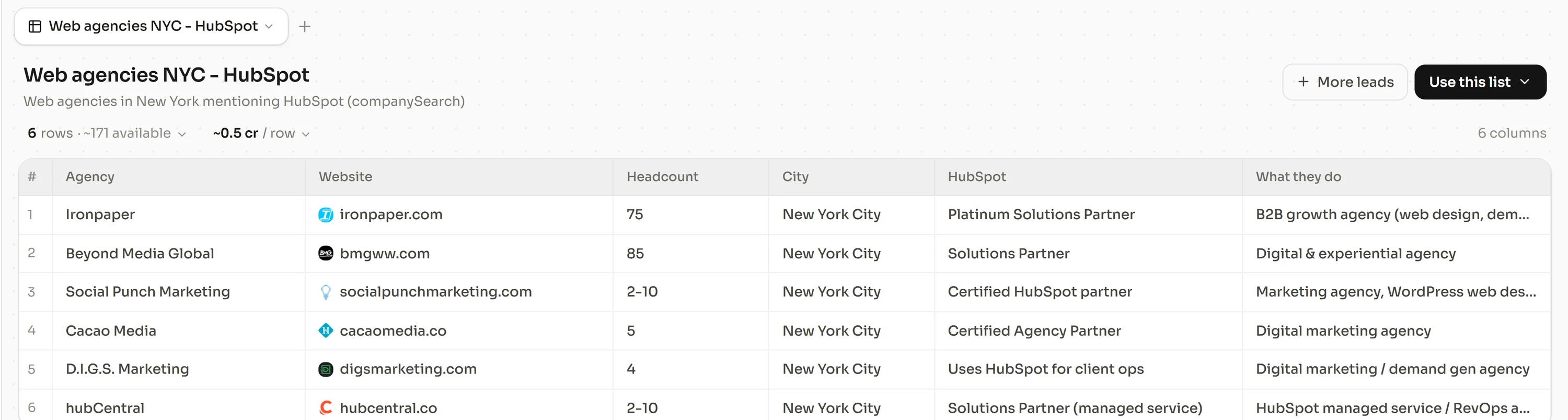
Every row is enriched through cascades of 24 email providers and 15 phone providers, which find and verify more than 92% of emails and find more than 90% of phone numbers. Freelvy then writes and sequences the outreach in the same thread, so the list, the contacts and the first email stay together.
Pricing is per seat, billed monthly, with no lock-in. Starter costs €99 per seat a month with 2,200 credits per seat, and Pro €199 with 4,500. A verified email costs 3 credits and a phone number found costs 15, and an email that is not found costs nothing. Sending accounts for email and LinkedIn are included per seat, and the sequencer is unlimited.
Free 7-day trial, no credit card, at freelvy.com.
Freelvy isn't for teams that would rather pay one tool for the data, another for enrichment and a third for sending.
FAQ
Why am I getting no replies to my cold emails?
Usually one of four reasons. The addresses bounce, the emails land in spam, they reach people who are not buyers, or too few people have been contacted to judge. Check bounce rate, placement, who replies and volume, in that order, before rewriting the copy.
What is a good cold email reply rate in 2026?
Instantly's Cold Email Benchmark Report 2026 measured an average of 3.43%, with top-quartile campaigns at 5.5% and its best campaigns above 10%. Use the average to judge whether a result is unusual, not as a target for every list.
How many cold emails should I send before judging a campaign?
At least 100 to 150 contacts. At a 3.43% reply rate, 100 contacts with zero replies happens by chance about 3% of the time, and 50 contacts about 17%, by our arithmetic. Below that, silence proves little.
Should I trust cold email open rates?
No. Apple Mail Privacy Protection, introduced in 2021, loads tracking images automatically, so open rates are inflated. A high open rate with no replies does not prove the copy failed. Judge with replies, bounces and a placement test on seed inboxes.
What bounce rate is too high for cold email?
2026 deliverability analyses by Instantly and EmailAddress.ai treat a bounce rate above 2% as a sign of poor list hygiene. Above 2%, stop sending, verify the list, and remove every address that fails before the next batch.
Why did my cold email reply rate drop?
The list wore out, the best segment was already contacted, or the domain's reputation slipped. Compare bounce rates month on month, check which segment you are now writing to, and run a placement test. New copy alone rarely fixes a falling rate.
Sources and methodology
All pages below were read on November 1, 2026. Instantly, EmailAddress.ai and Cleanlist sell sales software; their figures describe their own platforms and data. The chance table treats the 3.43% average as the probability that any one contact replies, which is our simplification.
- instantly.ai, Cold Email Benchmark Report 2026
- Google, email sender guidelines, as relayed by 2026 bulk sender compliance guides
- instantly.ai, email list validation and upload quality checks, 2026
- emailaddress.ai, email bounce rate benchmarks 2026
- cleanlist.ai, B2B data decay statistics, 2026
- gartner.com, Gartner sales survey finds 74% of B2B buyer teams demonstrate unhealthy conflict, May 7, 2025